How Long Does Fire Damage Restoration Take?
After a fire, one of the first questions every homeowner asks is: how long will this take? The answer depends on the severity of the fire, the extent of smoke and water damage (since firefighting efforts often cause significant secondary water damage), and the size of the affected area. A minor kitchen fire with limited smoke damage might be fully restored within one to two weeks. A major structural fire that compromised multiple rooms can take three to six months or longer to complete. Understanding the fire damage restoration timeline helps you plan, set realistic expectations, and avoid costly delays.
This guide breaks down the fire damage restoration process step by step, explains what affects the timeline at each stage, and covers what to expect when working with your insurance company — all based on what we see every day restoring fire-damaged properties across Long Island.
The Fire Damage Restoration Timeline: An Overview
Fire damage restoration isn't a single event — it's a multi-phase process, and each phase has its own timeline. Here's a general overview before we dive into the details. Emergency response and board-up typically happens within the first 24 hours. Assessment, documentation, and insurance coordination take 2 to 5 days. Smoke and soot cleanup takes 3 to 7 days depending on the extent. Water extraction and structural drying (from firefighting water) adds another 3 to 5 days. Demolition and removal of unsalvageable materials can take 1 to 2 weeks. Reconstruction and restoration — the longest phase — takes 2 weeks to several months depending on scope.
The critical insight is that these phases overlap rather than run sequentially. A good restoration company begins cleanup while the insurance assessment is still being finalized, starts drying while soot removal is in progress, and can have demolition underway before the final scope of reconstruction is fully defined. This parallel approach is what separates a 6-week restoration from a 6-month one.
Phase 1: Emergency Response and Securing the Property
The first 24 hours after a fire are critical. Once the fire department has cleared the scene and declared the structure safe to enter, the restoration process begins immediately with board-up and tarping services. Broken windows are boarded with plywood, compromised roof sections are covered with heavy-duty tarps, and open wall sections are secured to prevent weather exposure, theft, and animal intrusion.
This phase also includes emergency water extraction. Most people don't realize that firefighting water damage can rival or exceed the fire damage itself. A fully involved room fire can result in thousands of gallons of water applied by the fire department, much of which soaks into flooring, walls, and furnishings throughout the home — not just in the room that burned. Getting this water out quickly prevents mold growth and additional structural deterioration. At American Eagle Restoration, we respond 24/7 for fire emergencies and typically have a crew on site within hours of the fire department clearing the scene.
Phase 2: Assessment and Insurance Coordination
Before major restoration work begins, a thorough assessment documents every aspect of the damage. This includes structural damage from flames and heat, smoke and soot contamination throughout the property (smoke travels far beyond the fire's origin point through HVAC systems and natural convection), water damage from firefighting efforts, and content damage to belongings and furnishings.
This assessment serves two purposes: it creates the scope of work for the restoration project, and it forms the basis of your insurance claim. A detailed, well-documented assessment is the single most important factor in getting a fair insurance settlement. We photograph every affected area, create room-by-room inventories, and use industry-standard estimating software that insurance companies recognize and accept. This typically takes 2 to 5 days, depending on the property size and damage complexity.
During this phase, we also coordinate directly with your insurance adjuster. Having a professional restoration company working alongside the adjuster ensures that hidden damage — like smoke contamination inside wall cavities or water damage in subfloors — isn't overlooked. Damage that isn't documented during the initial assessment often isn't covered later, so thoroughness now saves you money down the road.
Phase 3: Smoke and Soot Cleanup
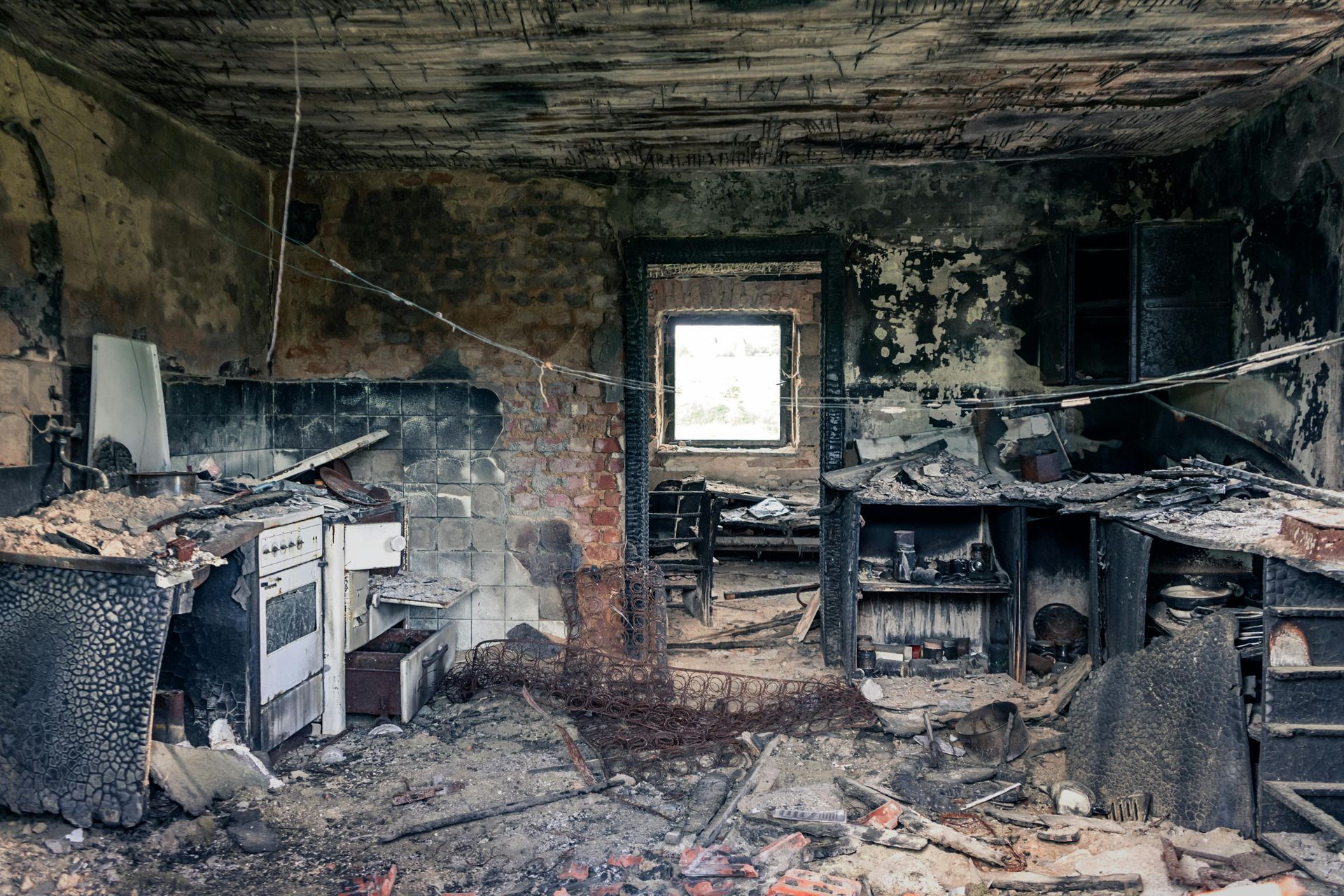
Smoke and soot removal is painstaking, technical work that requires specialized equipment and chemicals. Soot is acidic and, if left on surfaces, will permanently stain and corrode metals, discolor paint and finishes, and etch glass. The type of soot varies based on what burned — synthetic materials produce sticky, black, petroleum-based soot that's harder to clean than the dry, powdery soot from natural materials like wood.
Professional smoke damage cleanup involves HEPA vacuuming all surfaces to remove loose soot particles, chemical sponge cleaning of walls and ceilings, specialized cleaning of all salvageable contents (electronics, clothing, furniture), cleaning and sealing of HVAC ductwork to prevent recirculation of soot and odors, and application of thermal foggers and ozone generators for odor elimination. This phase typically takes 3 to 7 days for a moderate fire, though large properties or fires involving synthetic materials can take longer.
Phase 4: Water Damage Mitigation
As mentioned earlier, the water damage from firefighting efforts often rivals the fire damage itself. This phase involves extracting standing water, setting up commercial dehumidifiers and air movers to dry the structure, and monitoring moisture levels daily until the building reaches acceptable dryness standards. This typically takes 3 to 5 days, though some situations — particularly when water has reached subfloors or been absorbed into concrete — can take longer.
Proper drying is non-negotiable. If reconstruction begins before the structure is fully dry, you're essentially building new walls and floors around trapped moisture — which guarantees mold growth within weeks or months. Every reputable restoration company monitors moisture with professional-grade meters and follows IICRC S500 standards for structural drying. If a company wants to skip this phase or rush it, that's a red flag.
Phase 5: Demolition and Debris Removal
Once the property is dried and cleaned of surface contamination, the next step is removing materials that are too damaged to save. Fire-damaged drywall, charred framing, melted or heat-warped fixtures, destroyed insulation, and other unsalvageable materials are carefully removed and disposed of according to local regulations. On Long Island, fire debris disposal must comply with New York State DEC regulations, and some materials (like asbestos, which is common in pre-1980 homes) require specialized handling and licensed abatement contractors.
This phase typically takes 1 to 2 weeks. The key is removing enough material to expose the full extent of hidden damage while preserving as much of the structure as possible. Over-demolition adds unnecessary reconstruction cost and time. Under-demolition risks leaving damaged or contaminated material behind walls, which can cause problems later. Experienced fire damage restoration companies know exactly where to draw this line.
Phase 6: Reconstruction and Final Restoration
This is the longest phase and the one most homeowners are eager to reach. Reconstruction involves rebuilding everything that was removed or destroyed — framing, drywall, flooring, cabinetry, fixtures, electrical, plumbing, painting, and finishing. For a moderate fire affecting one or two rooms, reconstruction typically takes 2 to 4 weeks. For a major fire requiring structural repairs across multiple areas of the home, expect 2 to 4 months or more.
The timeline for this phase depends heavily on material availability and permit requirements. On Long Island, building permits are required for most structural repairs, electrical work, and plumbing modifications. The permitting process in Nassau and Suffolk counties can add 2 to 4 weeks to the timeline, depending on the municipality. Material lead times for custom items like cabinetry, specialty flooring, or matching exterior finishes can add additional delays.
A full-service restoration company like American Eagle Restoration manages the entire reconstruction process, including permit applications, subcontractor coordination, material procurement, and final inspections. Having one company handle everything from emergency response through final reconstruction eliminates the gaps and miscommunications that occur when multiple unrelated contractors are involved.
What Affects the Fire Damage Restoration Timeline
Several factors can extend or shorten the overall timeline. The size and intensity of the fire is obvious — a grease fire contained to the stove takes days to restore, while a fire that broke through the roof takes months. Insurance response time matters too — if your adjuster takes 3 weeks to inspect, that delays the start of major work. Content removal and storage adds time if you have a large household of belongings that need to be inventoried, cleaned, or replaced. And the age of your home can add time if demolition reveals outdated electrical, plumbing, or structural conditions that need to be brought up to current building codes.
The single biggest factor you can control is speed of initial response. The faster professional restoration begins after the fire, the less secondary damage occurs, and the shorter the overall timeline. Every day of delay in the first week can add a week to the final completion date. If your Long Island home has suffered fire damage, call American Eagle Restoration at (516) 557-4474 immediately — we respond 24/7, work with all insurance carriers, and manage every phase of restoration so you can focus on your family.
ARTICLE AUTHOR:
American Eagle Restoration
rican Eagle Restoration provides fast, effective vandalism and graffiti cleaning services. Restore your property’s appearance and protect it from future damage with our expert solutions.
Leave a Reply