Sewage Cleanup Services in Suffolk County
Available 24/7 for Emergency Sewage Backup Cleanup in Suffolk County
— One Call Handles Extraction, Sanitization, and Full Restoration
Suffolk County stretches across the eastern two-thirds of Long Island, encompassing everything from densely settled western townships to the rural hamlets and twin forks that define the island's far reaches. It's a region of enormous geographic and demographic variety — and one where the combination of older sewer infrastructure in established communities, private cesspools in less-serviced areas, and a water table that responds sharply to seasonal conditions creates persistent sewage backup risk for property owners throughout the county. American Eagle Restoration provides professional sewage cleanup across Long Island, equipped and ready to respond to Suffolk County homes and businesses when Category 3 contamination strikes. Our technicians extract hazardous black water, disinfect every affected surface and material, eliminate sewage odors at the source, and restore properties to a condition that is fully safe, structurally sound, and ready for occupancy — handling the entire process with the technical precision the work demands.

Contact American Eagle Restoration!
Contact us today for expert property restoration services. We're here to help you recover quickly and efficiently.
Water Damage Restoration - Website Form

CLIENT REVIEWS
WHAT OUR CLIENTS ARE SAYING
American Eagle Restoration responded quickly when our basement flooded. Their team was professional, efficient, and incredibly thorough. They dried everything out and restored our basement to its original condition. The entire process was stress-free, and I couldn’t be happier with the results. Highly recommended!
I was impressed by the quality of service from American Eagle Restoration after a fire in our kitchen. They handled everything with care and precision, restoring our home quickly. The team was friendly, responsive, and committed to ensuring we were satisfied with the work. I would definitely use them again.
Professional Sewage Cleanup in Suffolk County Handled From Start to Finish
A sewage backup introduces a category of damage that goes well beyond what water alone causes. The contaminants present in raw sewage — bacteria, viruses, parasites, and other biohazardous agents — create immediate health risks for anyone in proximity and begin compromising structural materials in ways that accelerate with every passing hour. American Eagle Restoration's approach to sewage cleanup on Long Island is engineered specifically for that reality, delivering a process for Suffolk County properties that is methodical, containment-focused, and held to a standard of complete remediation — not surface-level resolution.
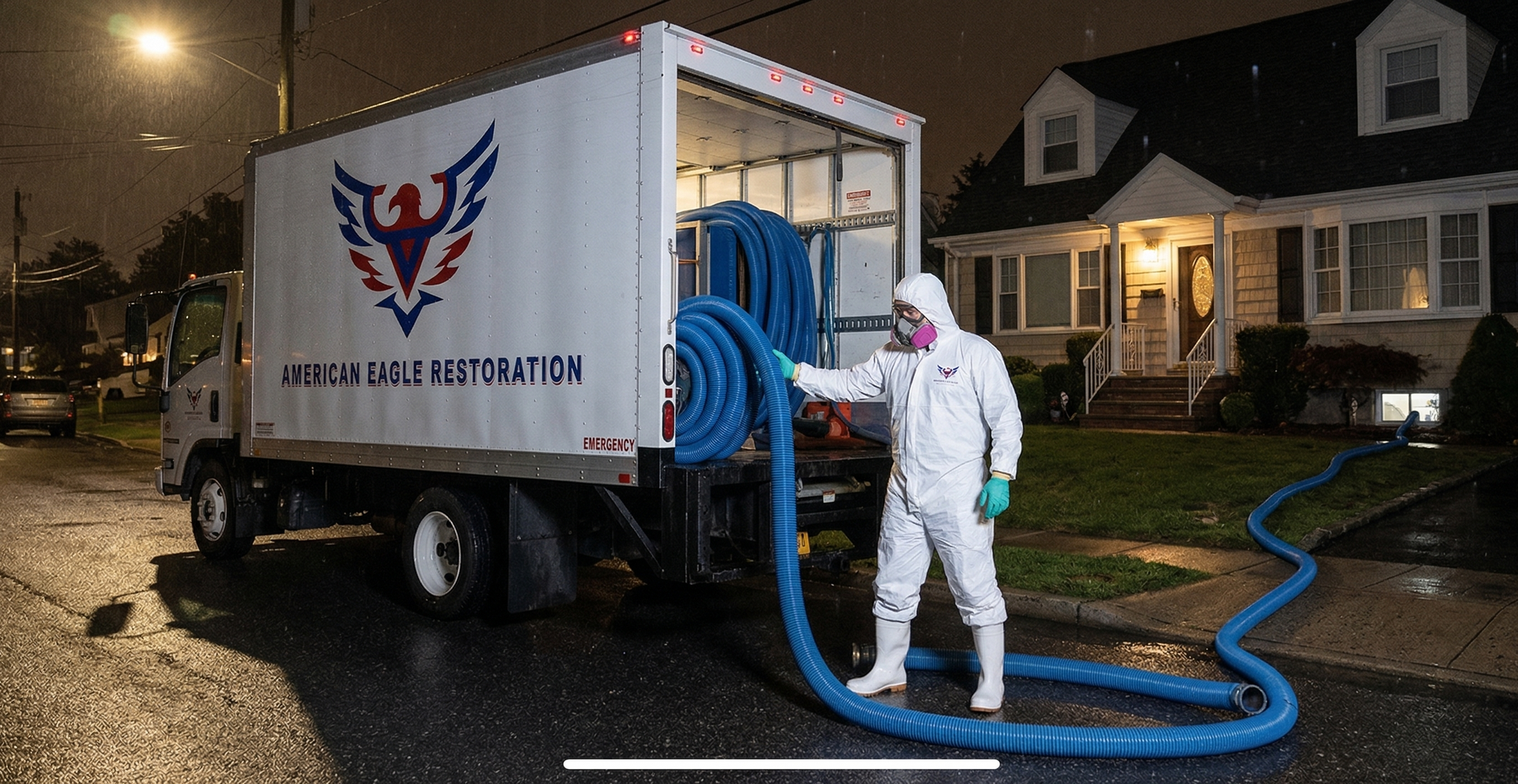
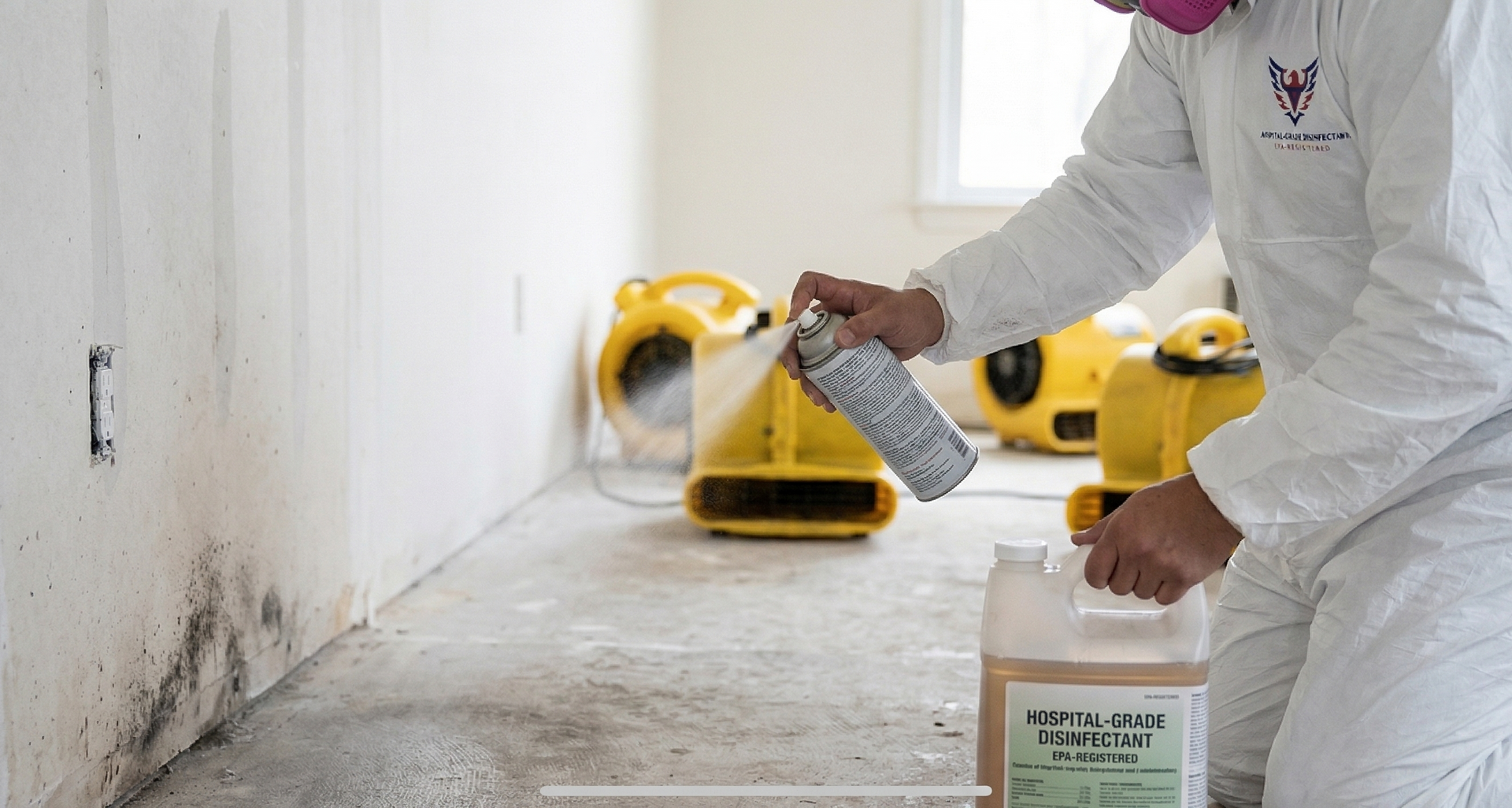
Each project opens with a thorough on-site assessment: locating the contamination source, establishing exactly how far the waste has traveled through the structure, and identifying the full inventory of affected materials before any equipment is set up. Standing sewage is then removed using industrial-grade extraction systems in a contained, controlled operation that prevents cross-contamination into clean areas of the building. Porous building materials that the sewage has penetrated beyond the point of recovery — sections of drywall, carpet padding, degraded insulation — are carefully removed and disposed of under certified biohazard protocols. Every surface that came into contact with the waste is then cleaned manually and treated with EPA-registered antimicrobial solutions formulated to neutralize the pathogens specific to Category 3 contamination. Commercial air movers and dehumidifiers run a full structural drying cycle, drawing residual moisture from the building envelope, while targeted deodorization treatments break down the odor compounds that raw sewage forces into walls, floor assemblies, and cavities throughout the structure. What Suffolk County property owners receive at the end of that process is a property that has been genuinely restored — not just cleaned up enough to look acceptable.
What Our Comprehensive Sewage Cleanup Process Includes in Suffolk County
Suffolk County property owners who turn to American Eagle Restoration receive a fully coordinated recovery managed by a single experienced team. Every phase of the sewage cleanup — from the first containment measures through final sanitization — is executed in sequence, in-house, and without gaps. One call, one team, one complete turn-key process.
Rapid Damage Assessment
We immediately inspect the property to determine the extent of the contamination and develop a customized, safe action plan.
Contaminated Water Extraction
Using powerful, industrial-grade pumps and vacuums, we quickly remove all standing wastewater and solid waste from the premises.
Debris Removal and Disposal
We safely remove and properly dispose of all contaminated porous materials that cannot be salvaged, such as ruined carpets, padding, and heavily saturated drywall.
Deep Cleaning and Sanitization
Our technicians apply specialized, hospital-grade antimicrobial and biocide treatments to thoroughly disinfect all salvageable surfaces and eradicate harmful pathogens.
Professional Deodorization
We utilize advanced air scrubbers and thermal fogging equipment to neutralize airborne odors rather than simply masking them.
Structural Drying
We deploy commercial dehumidifiers and high-velocity air movers to extract deep-seated moisture from the building materials, preventing future mold growth.
Are you experiencing an emergency or do you have damage from water, fire, smoke or mold? CALL US NOW!
What to do when your sewage backs up in Suffolk County?
The moments immediately following the discovery of a sewage backup are among the most consequential in the entire event — the actions taken in that window directly shape the trajectory of the damage and the scope of the recovery. Clearing the building is the absolute first priority. All occupants — household members, employees, and pets — must leave the contaminated area before any other step is considered. Sewage contamination isn't limited to the surfaces the waste is visibly touching; pathogens become airborne in enclosed spaces and make the surrounding environment unsafe for anyone without proper protective equipment. Under no circumstances should anyone re-enter the affected area to retrieve belongings, assess damage, or attempt initial cleanup without full PPE — the exposure risk is immediate and serious. Where the main water shutoff and electrical breaker panel can be reached without entering the contaminated zone, closing the water supply and cutting power to the affected area are both worthwhile precautions — stopping further water infiltration and removing the electrocution hazard that energized circuits near standing water represent. Once the building is cleared and those acute hazards are addressed, contacting a professional restoration team immediately is the single most important decision a property owner can make. Across Suffolk County and the broader Long Island area, the speed of that call determines how far contamination spreads, how deeply it penetrates structural materials, and how much of the property can ultimately be recovered.
How to properly clean up sewage in Suffolk County?
The technical demands of sewage remediation are significant — and the consequences of performing the work incorrectly are not limited to the cleanup phase. Every procedural step in the process is there because the material being handled is a genuine biohazard, and any deviation from proper protocol creates risks that may not surface until well after the job appears finished. Our technicians are fully suited before crossing into any contaminated space: hazmat suits, respirators, waterproof boots, and industrial gloves meet the safety requirements for Category 3 biohazard work and are worn without exception from first entry. Extraction is performed using sealed, heavy-capacity vacuum systems built for biohazardous waste removal — pulling raw sewage and contaminated water from the structure in a contained manner that does not redistribute pathogens into unaffected areas. Once visible waste is cleared, all surfaces exposed to contamination are scrubbed and treated with professional-grade antimicrobial agents proven effective against the bacteria, viruses, and other pathogens found in raw sewage. Materials that absorbed the contamination and cannot be brought back to a safe condition — flooring underlayment, soaked wall panels, compromised padding — are sealed in certified biohazard containment bags and removed from the property permanently. The remediation process closes with rigorous structural drying and dehumidification, targeting moisture that has been pushed into wall cavities, subfloor systems, and structural framing during the event. Left unaddressed, that concealed moisture becomes the starting point for mold growth that compounds the original damage for months inside the building structure. For Suffolk County properties on Long Island, completing every one of these steps without exception is what produces a restoration that holds.
How long does sewage cleanup in Suffolk County take?
Sewage cleanup timelines are as variable as the properties and events involved, and setting realistic expectations requires understanding what actually drives the schedule. A contained, single-room event — an overflowed floor drain, a backed-up bathroom in an isolated part of the building — can often be extracted, disinfected, and set into the drying phase within a single day, with commercial drying equipment continuing to operate for several days afterward. When a sewer main failure sends waste through a finished basement or across several zones of a Suffolk County home or commercial property, the undertaking expands substantially. Projects of that scale involve deliberate, methodical removal of saturated building materials, detailed cleaning of structural framing and exposed joists, and prolonged dehumidification cycles that run until moisture readings confirm the full building assembly is dry at every layer. The active remediation and drying work across most projects falls within a three-to-five-day range, with reconstruction to replace removed materials — insulation, drywall, finished flooring — adding time beyond that in proportion to the damage extent. Our team works with consistent urgency throughout every phase, driving toward completion while holding to the standards that make the finished result worth standing behind.
How much does sewage cleanup cost in Suffolk County?
Accurately projecting the cost of a sewage cleanup requires looking at the specific circumstances of the event — general estimates without a proper assessment are rarely reliable. The square footage affected and the volume of sewage extracted establish the baseline, but the composition of what was damaged frequently becomes the more significant variable. A backup that reached finished residential or commercial spaces — hardwood floors, carpeted areas, insulated and drywalled walls — involves a substantially greater scope of labor and material handling than one contained to an unfinished mechanical room or bare concrete surface. The window between when the backup occurred and when professional cleanup began matters considerably as well; sewage that has been sitting for an extended period works progressively deeper into structural materials and raises the probability of mold development, both of which expand the remediation required and affect the final project cost. American Eagle Restoration partners directly with all major insurance carriers to support Suffolk County property owners through the claims process, providing thorough, clearly documented damage assessments that give a complete accounting of the conditions found and the restoration work required — delivered with full transparency before any activity on the property begins.


Why Choose Recognized Experts for Sewage Cleanup in Suffolk County
Suffolk County spans a tremendous range of communities, property types, and infrastructure conditions — and American Eagle Restoration has spent more than 30 years building the experience and operational depth to handle sewage cleanup across all of it. As a family-owned restoration company, we operate with the accountability that comes from having our name on every job we take, which means the standard doesn't fluctuate based on the size of the project or the location of the property. Our emergency response line is staffed continuously — 24 hours a day, every day of the year — because we have never operated under the assumption that property owners can wait until a convenient time to address active contamination. Every technician we deploy across Suffolk County is fully licensed, insured, and current on biohazard remediation training and best practices. Our turn-key service model gives property owners a single point of contact and a single accountable team covering the entire recovery — from initial extraction and disinfection through structural drying and final sanitization — with no need to source or manage additional contractors. Throughout every project, communication is consistent and proactive, so property owners always have a clear picture of where things stand and what comes next. When the work is complete, the property is restored, the documentation is thorough, and there is nothing left unresolved.
Frequently Asked Questions About Sewage Cleanup in Suffolk County
Is sewage backup covered by my homeowners insurance policy?
Whether your homeowners insurance covers a sewage backup heavily depends on the specific details of your policy and the root cause of the incident. Standard homeowner policies often exclude water damage resulting from sewer or drain backups unless you have purchased a specific water backup endorsement or rider. If the backup was caused by an issue originating within your own plumbing system, such as a localized blockage, there is a higher chance of coverage compared to a municipal sewer main failure. Because navigating insurance claims can be complex and overwhelming during a crisis, our team routinely works with all insurance carriers. We help properly document the damage, provide detailed assessments to your adjuster, and advocate for the necessary restoration procedures to assist you in maximizing your eligible coverage.
Can I handle a minor sewage spill myself to save money?
Attempting to clean up any amount of raw sewage yourself is highly discouraged due to the extreme health hazards involved. Even a seemingly minor spill contains millions of harmful microorganisms, including bacteria, viruses, and parasites that can cause severe gastrointestinal and respiratory illnesses. Standard household cleaning supplies like bleach and basic mops are entirely insufficient for true biohazard decontamination and often just push the pathogens around or leave microscopic threats behind. Furthermore, without industrial moisture meters and drying equipment, it is nearly impossible to tell if wastewater has seeped into the subfloor or behind baseboards. Relying on professional experts ensures that the biohazards are completely eradicated, the moisture is entirely removed, and your indoor environment is genuinely safe for your family or employees.
What are the specific health risks associated with raw sewage exposure?
Exposure to raw sewage presents a multitude of severe health risks that can affect individuals through direct physical contact, inhalation of toxic fumes, or accidental ingestion. Wastewater is heavily contaminated with dangerous pathogens such as E. coli, Salmonella, Hepatitis A, and various forms of rotavirus. Contact with these biological hazards can lead to serious skin infections, severe gastrointestinal distress, and debilitating systemic illnesses. Additionally, as the sewage begins to dry or if it is disturbed, it releases microscopic bio-aerosols into the air, which can cause significant respiratory problems and trigger severe allergic reactions or asthma attacks. Prompt removal and professional-grade sanitization are absolutely essential to eliminate these invisible threats and restore healthy indoor air quality.
Will my flooring and walls need to be replaced after a backup?
The necessity of replacing building materials after a wastewater backup depends entirely on the porosity of the materials and the duration of their exposure to the contamination. Highly porous items such as carpet, carpet padding, fabric upholstery, and heavily saturated drywall cannot be effectively sanitized once they absorb "black water" and must be safely removed and discarded to prevent mold and lingering odors. Semi-porous or non-porous materials, such as treated concrete, certain types of tile, and solid wood framing, can often be saved if the response time is swift. Our skilled technicians meticulously evaluate every inch of the affected area using advanced moisture detection equipment to determine exactly what can be confidently salvaged through intensive cleaning and what must be replaced to guarantee the safety and structural integrity of your property.
How can I proactively prevent future sewage backups in my property?
Preventing future sewage backups requires a combination of mindful daily habits and routine property maintenance. One of the most effective measures is being highly cautious about what you flush down your toilets or wash down your drains; you should never dispose of grease, fats, paper towels, flushable wipes, or feminine hygiene products into your plumbing system, as these commonly cause severe blockages. It is also wise to have a professional plumber routinely inspect and clear your main sewer line, especially if your property is older or surrounded by large trees whose aggressive root systems frequently infiltrate and crush underground pipes. Finally, installing a sewer backwater valve on your main line can provide a crucial physical barrier, automatically closing to prevent municipal wastewater from reversing its flow and entering your home during heavy storms or city infrastructure failures.
Don’t wait—every hour counts when smoke damage strikes. Contact American Eagle Restoration (AER) today for expert smoke damage cleanup on Long Island and get your home or business back to its best. Call us 24/7 or request an assessment now.
Expert Solutions for Every Need
INTERESTED IN OUR SERVICES?
We want to know your needs exactly so that we can provide the perfect solution. Let us know what you want and we’ll do our best to help.